
Can I Afford to Retire? Why Your Goals Matter More Than Your Pension Pot
Introduction

Do I have enough money to retire?
This question can be a bit like getting into a car and asking whether there is enough fuel in the tank for a trip. The answer depends on where you are trying to get to.
A short local journey needs very different fuel from a long trip across the country. The same applies to retirement planning. A pension pot, savings balance or investment portfolio only really means something when it is linked to the life it needs to support.
That is why good retirement planning should start with objectives, not products.
Before asking questions, such as whether you should draw pension benefits flexibly via drawdown, exchange them for a guaranteed income via an annuity, utilise a ISA, or a particular investment strategy, it is worth stepping back and asking a more personal question:
What do I actually want this money to do for me?
Key Takeaways
• Asking “Do I have enough money to retire?” only makes sense once you know what retirement needs to fund.
• Your pension pot is like fuel in the tank — whether it is enough depends on the journey you want to take.
• Clear retirement objectives help turn vague worries into specific planning questions.
• Splitting spending into essential, desirable and aspirational goals can make retirement planning more practical.
• Product choices such as drawdown, annuities, ISAs or pensions should usually follow the planning conversation, not lead it.
• Cashflow modelling can help test different retirement ages, spending levels, market conditions and later-life needs.
Contents
Why “enough money” is not a simple number
Many people worry about running out of money in later life. That concern is completely understandable.
The difficulty is that “running out of money” means different things to different people.
For one person, the main concern may be covering essential household bills for life. For another, it may be maintaining holidays, hobbies and financial support for family. Someone else may be focused on inheritance, care costs, downsizing, or whether they can retire earlier than planned.
This is why the size of the pension pot alone does not tell the full story.
A £300,000 pension might be more than enough for one person and nowhere near enough for another. A £1 million pension might sound substantial, but it still depends on spending, tax, investment returns, inflation, health, family needs and retirement length.
In other words, the question is not only:
“How much have I got?”
It is also:
“What does this money need to fund, and for how long?”
Start with the destination
Using the journey analogy, your retirement objectives are the destination.
Without a destination, it is very hard to know whether you have enough fuel, whether you need to change route, or whether you are travelling in the right direction.
In retirement planning terms, the destination might include questions such as:
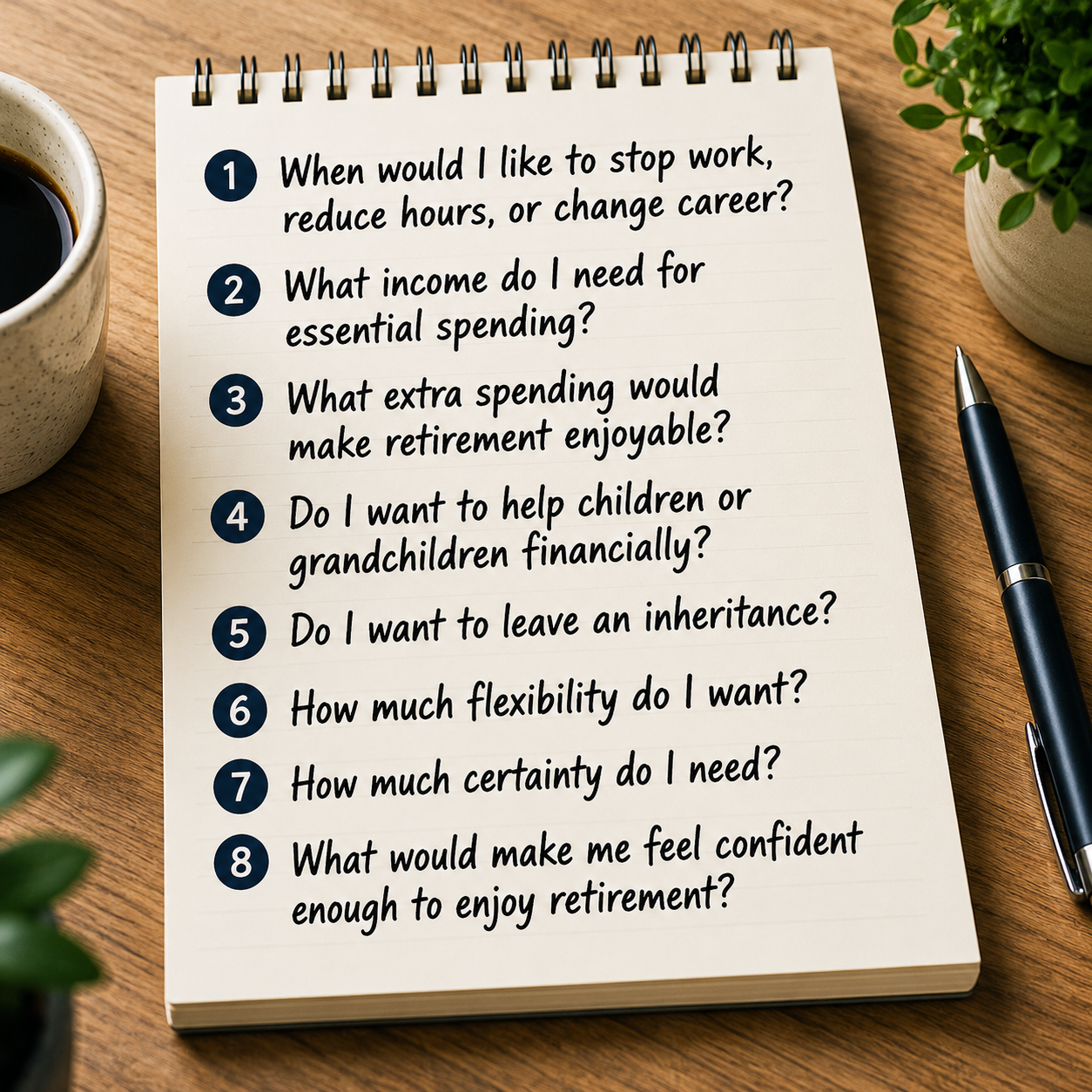
Once the destination is clearer, the planning becomes much more useful.
The journey matters too
Even when two people have the same destination, the journey may look different.
One person may be comfortable taking a route with more uncertainty if it offers more flexibility and potential growth. Another may prefer a steadier route, even if it means giving up some flexibility.
The amount of “fuel” needed can also depend on several factors:
Speed
Retiring earlier can mean drawing on savings for longer. Retiring later may give pensions and investments more time to grow.
Load
Supporting a spouse, partner, children, grandchildren, or other family members may increase the pressure on the plan.
Efficiency
Tax, product charges, investment costs and withdrawal strategy can all affect how far the money may go.
Conditions
Markets, inflation, interest rates, health, care needs and tax rules can all change the journey.
Distance
Retirement could last 20, 30 or even 40 years. That is a long period to plan for, especially when life rarely follows a straight road.
This is why retirement planning is not just about the size of the pot. It is about how that pot is used, what it needs to support, and how resilient the plan may be if things change.
Turning vague aims into clear objectives
Many people start with broad aims such as:
“I want to be comfortable.”
“I do not want to run out of money.”
“I want to retire as soon as I can.”
These are valid aims, but they are difficult to test properly unless they are made more specific.
This is where the idea of SMART objectives can help. In simple terms, a useful objective should be:
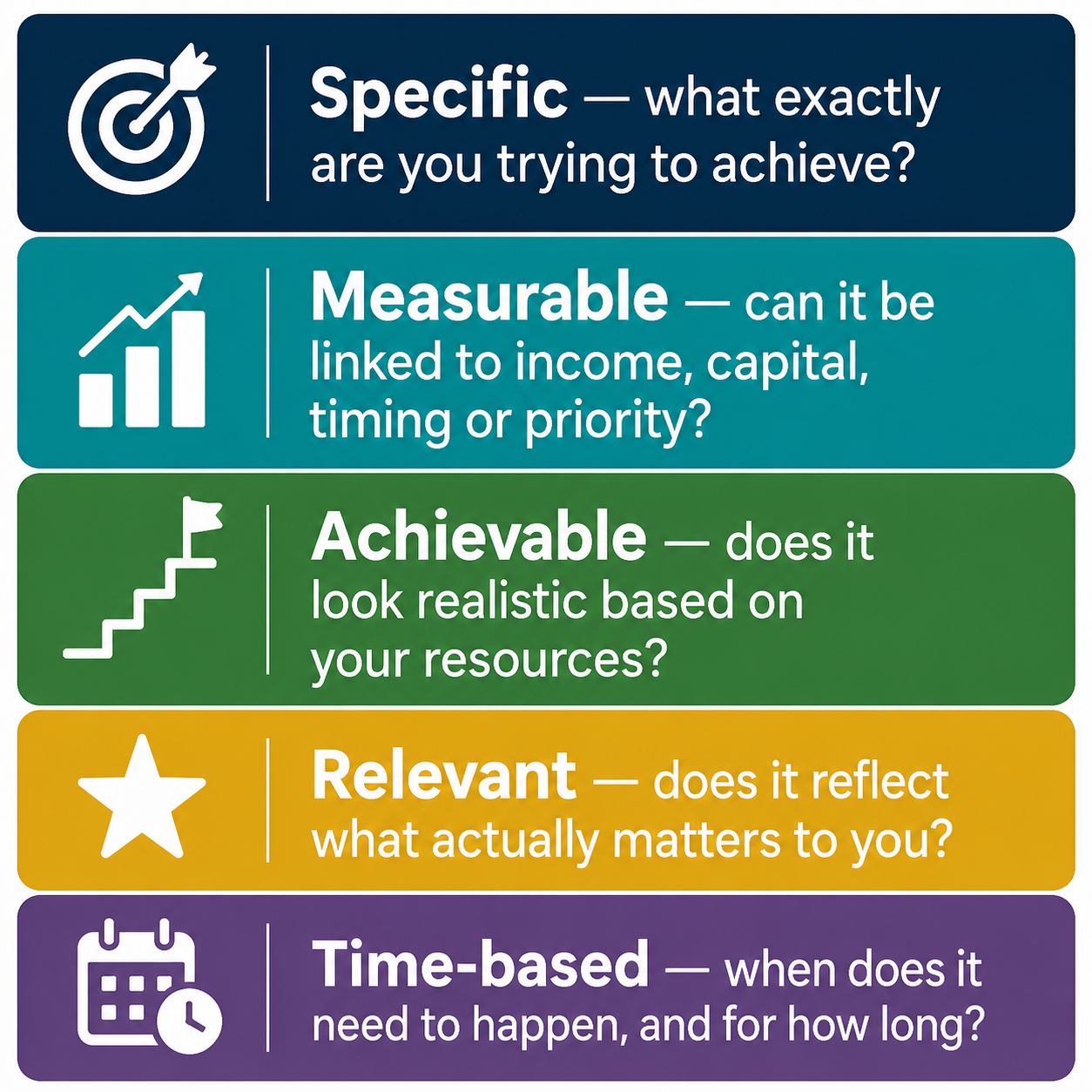
For example:
Less useful objective:
“I want to retire comfortably.”
More useful objective:
“I would like to retire at 62, cover essential spending of £2,200 per month after tax, have an additional £500 per month for holidays and leisure until age 75, and keep an emergency reserve of at least £30,000.”
The second version gives the plan something to test.
It does not mean everything will happen exactly as expected, but it creates a clearer starting point.
The second version gives the plan something to test.
It does not mean everything will happen exactly as expected, but it creates a clearer starting point.
Essential, desirable and luxury spending
One practical way to build retirement objectives is to split spending into three levels.
1. Essential spending
This is the spending that needs to be covered.
It may include:
household bills
food
council tax
insurance
transport
basic clothing
healthcare costs
mortgage or rent, if applicable
regular commitments
This is the foundation of the plan.
If essential spending is secure, someone may feel more comfortable with flexibility elsewhere. If essential spending depends heavily on investment returns, they may prefer more certainty.
2. Desirable spending
This is the spending that makes retirement enjoyable.
It may include:
holidays
hobbies
eating out
memberships
days out
home improvements
replacing cars
helping children or grandchildren
additional comfort and lifestyle spending
This is often where retirement becomes more personal. Two people with similar finances may have very different ideas of what a good retirement looks like.
3. Luxury or aspirational spending
This is spending that would be nice to achieve, but may not be essential to the success of the plan.
It may include:
larger gifts
significant travel
buying a second property
retiring much earlier
major home projects
leaving a larger inheritance
funding private care options
This level can be useful because it helps separate what is needed from what is optional.
A good plan does not just ask whether everything is affordable. It also helps identify what should take priority if compromises are needed.
What if retirement is still 20, 30 or 40 years away?

For younger people, setting retirement objectives can feel difficult.
If retirement is decades away, it may be unrealistic to know exactly where you want to live, how much you want to spend, or what lifestyle you will want in later life.
That does not mean planning is pointless.
At this stage, the aim is not to predict every detail. The aim is to build a sensible direction of travel.
For younger people, setting retirement objectives can feel difficult.
If retirement is decades away, it may be unrealistic to know exactly where you want to live, how much you want to spend, or what lifestyle you will want in later life.
That does not mean planning is pointless.
At this stage, the aim is not to predict every detail. The aim is to build a sensible direction of travel.
Useful questions may include:
What kind of lifestyle do I value now?
Would I rather have more time, more security, or more flexibility later?
Do I expect to support children, parents or other family members?
What retirement lifestyle have I seen in parents, grandparents or older colleagues?
What would I want to avoid?
Would I prefer to retire early, reduce work gradually, or keep working in some form?
How important is it to own my home outright before retirement?
Speaking to parents, grandparents or older family members can also help. Their experience may highlight costs, priorities and challenges that are not obvious earlier in life.
For example, some people spend more in the early years of retirement while they are active and travelling. Others spend steadily throughout retirement. Some later face care costs, health issues, or a need to simplify their finances.
You do not need perfect answers from the start. But even broad objectives can help shape pension contributions, savings habits and long-term planning decisions.
Why products should not be the starting point
Retirement income is often framed as a product decision.
Should I use drawdown?
Should I buy an annuity?
Should I leave my pension invested?
Should I use ISAs first?
Should I consolidate pensions?
Should I keep money in cash?
These are important questions, but they should usually come after the objectives are understood.
The better starting point is:
What combination of certainty, flexibility and growth potential do I need?
For example, one person may value flexibility. They may want the ability to vary income, keep money invested, help family, or preserve options.
Another person may sleep better knowing that a certain level of income will arrive every month for life.
Neither preference is automatically right or wrong. They are different responses to uncertainty.
In many cases, the answer may not be purely one thing or another. Some people may want a secure income floor for essential spending, while keeping other funds flexible for lifestyle spending, unexpected costs or future opportunities.
The key point is that product choice should follow the planning conversation.
The product should be the outcome, not the starting point.
Objectives can change over time
A retirement plan should not assume that the person retiring at 60 or 65 will think and feel exactly the same at 80 or 85.
In the early years of retirement, someone may feel confident managing investments, varying withdrawals and making financial decisions.
Later in life, the same person may value simplicity, certainty and less administration.
Family circumstances can also change. A spouse or partner may not want to manage the same level of complexity. Health, care needs, bereavement, market falls, tax rules and family priorities can all alter what good planning looks like.
This is why retirement objectives should be reviewed over time.
The plan is not just for today’s version of you. It also needs to consider your future self, and possibly the people who may one day need to understand or manage the arrangements.
Cashflow modelling connects objectives to numbers
Cashflow modelling helps connect your objectives to your financial position.
It is not designed to predict the future perfectly. Instead, it helps you understand how different decisions and events may affect your finances over time.
For example, cashflow modelling can help explore:
retiring earlier or later
spending more or less
using pensions, savings and investments in different ways
drawing more heavily in the early years of retirement
allowing for one-off costs
gifting money to family
downsizing
care costs
market falls
higher inflation
different life expectancies
keeping an emergency reserve
preserving funds for later life or inheritance
This can turn a vague worry into clearer planning questions.
Instead of simply asking:
“Will I run out of money?”
You can start asking:
“What would happen if I retire two years earlier?”
“What level of spending looks sustainable?”
“Which goals appear affordable, and which may need adjusting?”
“How much risk am I relying on?”
“What happens if life does not go exactly to plan?”
That is where cashflow modelling can be especially useful.
The risk of focusing only on accumulation
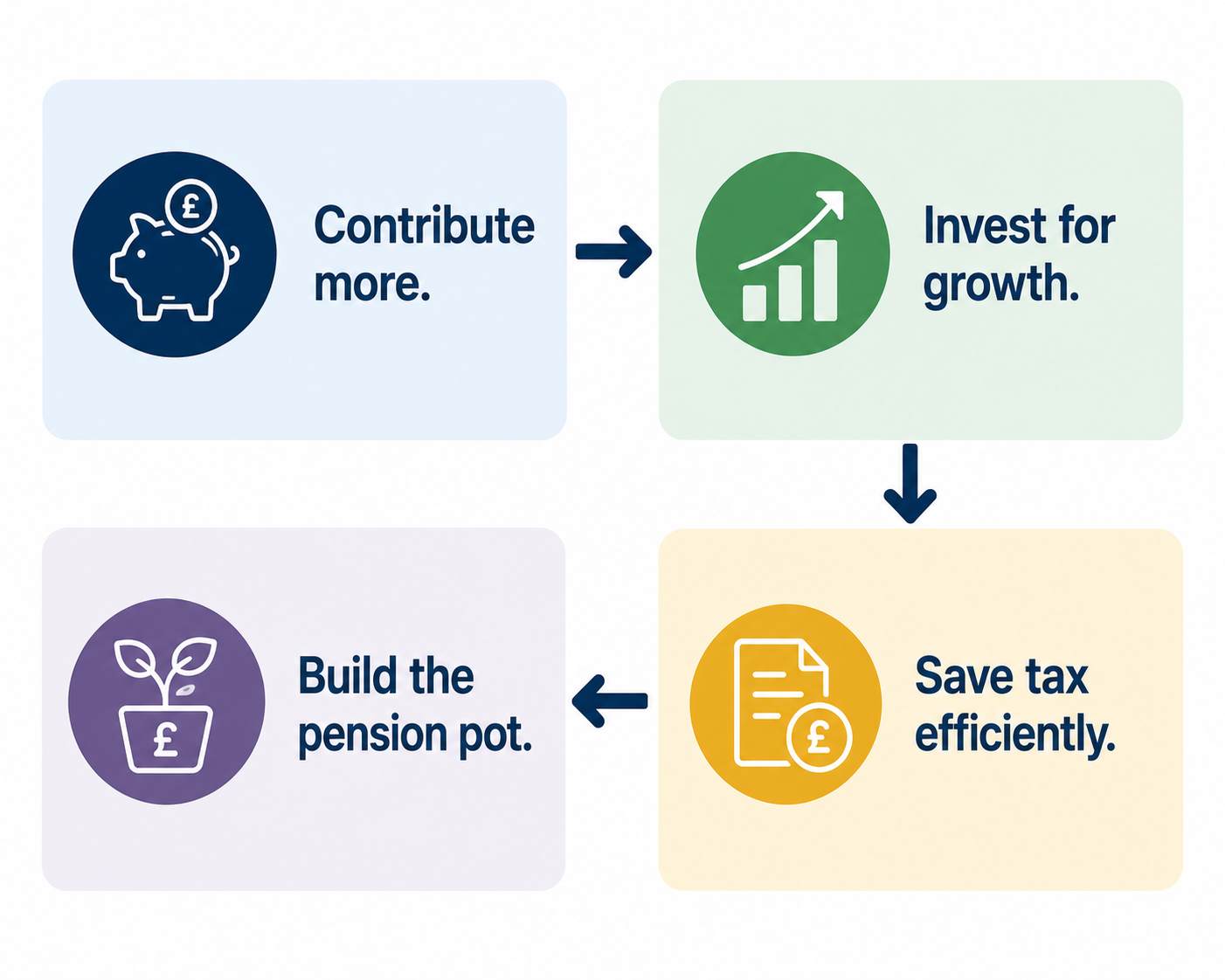
For many years, financial planning is often about building up as much as possible to accumulate your retirement funds.
That is important, but retirement planning is not only about having the biggest possible number.
There can also be a risk of over-saving or under-spending if someone is so worried about running out of money that they never use the money for the life they wanted.
Some people may unnecessarily restrict their lifestyle, delay retirement, avoid helping family, or continue working longer than needed because they do not have a clear picture of what is affordable.
Good planning should therefore consider both sides:
Do I have enough?
and
Am I making good use of what I have?
The objective is not simply to die with the largest possible pension pot. For many people, the objective is to use their money well, support the life they want, and retain enough security for the future.
Where Clear Thinking Finance UK can help
At Clear Thinking Finance UK, we help people explore their retirement objectives using clear discussion and cashflow modelling.
This can include looking at:
what retirement might cost
when you may be able to retire
whether your current plans look on track
how different spending levels affect the outcome
what happens if markets perform worse than expected
whether gifting or helping family may be affordable
how care costs or later-life needs could affect the plan
how different objectives compare in priority
The aim is to give you a clearer picture of your options, so you can make more informed decisions.
Clear Thinking Finance UK provides financial guidance and cashflow modelling, not regulated financial advice or personal product recommendations. Where regulated advice is needed, speaking to a qualified financial adviser may be appropriate.
Conclusion
Retirement planning works best when the conversation starts with the person, not the product.
Before asking whether drawdown, an annuity, an ISA, a pension or another option is the answer, it is worth asking:
Where am I trying to get to?
What spending is essential?
What would make retirement enjoyable?
How much certainty do I need?
How much flexibility do I want?
What risks do I need to allow for?
What would give me confidence to actually enjoy retirement?
Only then does the size of the pension pot start to mean something.
Just like a journey, the question is not simply whether there is fuel in the tank.
The real question is whether there is enough fuel for the journey you want to take.